📼 archiveYou're reading the Kubefirst Blog Archive — a slice of history from the kubefirst → Konstruct → Civo journey (2022–2024), preserved as written. The products live on at Civo.
Skip to main content

21 posts tagged with "Kubernetes"

Kubernetes and container orchestration

View All Tags

Experience a Production-Grade Kubernetes Platform Locally

· 18 min read

Frédéric Harper
Head of Developer Relations, Kubefirst

Experience a Production-Grade Kubernetes Platform Locally

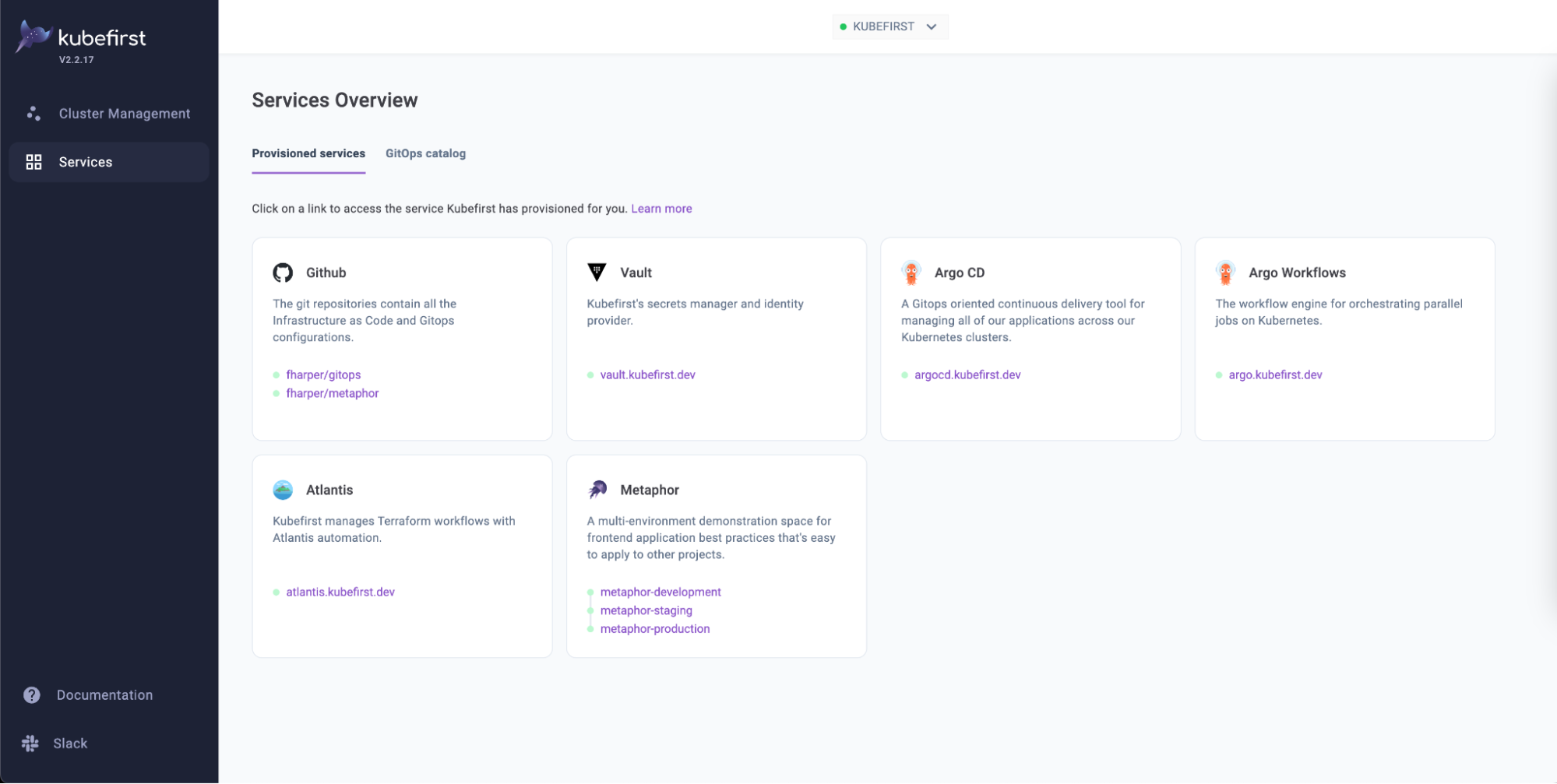
In this tutorial, I will show you how to use our CLI to deploy a new Kubernetes cluster in minutes, with the most popular cloud native tools running on your machine. We will deploy a new cluster locally, and we will explore some of its most useful features. With our new functional cluster containing already a lot of goodies, you will learn a bit more about the GitOps principles with your new "source of truth repository”, use Terraform with Atlantis to create new repositories within your management cluster, add a new user in HashiCorp Vault using code only, surf the Argo CD sync waves, and master the magic steps to deploy a new application in the cloud.
Install kubefirst Directly From the Civo Marketplace

· 5 min read
Frédéric Harper
Head of Developer Relations, Kubefirst

Install kubefirst Directly From the Civo Marketplace

You probably know it by now, but we are big fans of Civo. It was the first cloud we supported right after AWS. Until now, you were able to create a new cluster with all the kubefirst goodies on Civo using our CLI, or the UI installation, but we didn’t stop there: you can now use the Civo Marketplace to install kubefirst!

kubefirst 2.2 - GitOps Made Easy with the New Apps Catalog

· 3 min read
Frédéric Harper
Head of Developer Relations, Kubefirst

kubefirst 2.2 - GitOps Made Easy with the New Apps Catalog

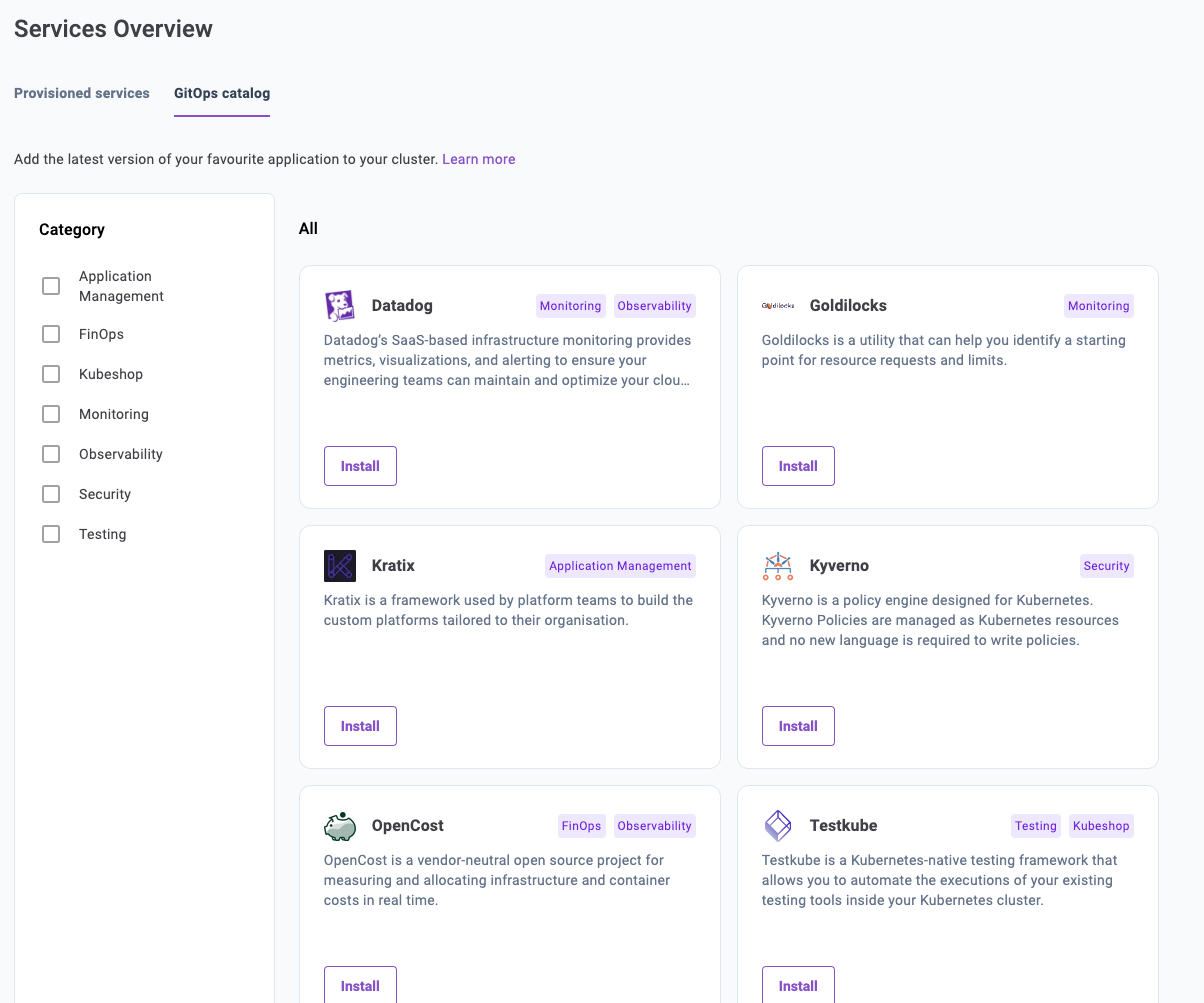
It started as an internal hackathon idea, we teased you about it in past livestreams, and it’s finally here: kubefirst now has a GitOps Catalog. Faithful to our goal to make Kubernetes adoption, and usage easier, this new catalog will make your life even better when it comes to adding new applications or tooling to your cluster while respecting the GitOps principles.

Kubefirst 2.1 - Instant GitOps Platform Gets an Amazing User Interface

· 8 min read
Frédéric Harper
Head of Developer Relations, Kubefirst

Kubefirst 2.1 - Instant GitOps Platform Gets an Amazing User Interface

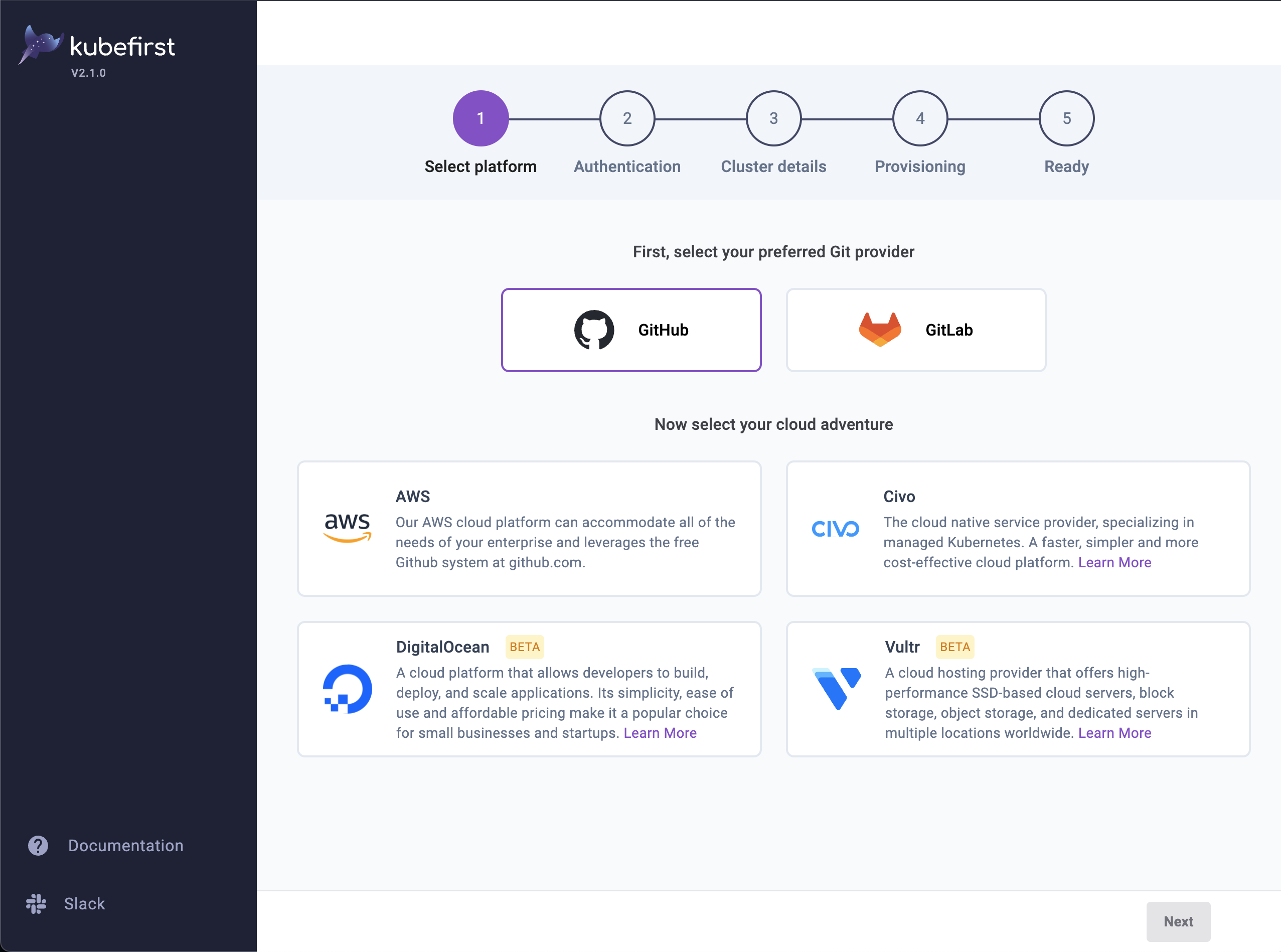
With this release, we are setting the foundation for the soon-to-be multi-clusters feature. By doing so, we introduced a more visual, and interactive way to create new management clusters. There are now more ways for you to create a management cluster, and have fun while doing so. It may not seem like much for a new release at first, but the engineering team was hard at work: they decoupled the logic from the CLI to create a shared library that also implements an API which will give us a consistent user experience. Read more to know how to jump the fun wagon, and swim in the new user experience.

kubefirst 2.0 Adds Civo, GitLab, UX++ & More

· 7 min read
Frédéric Harper
Head of Developer Relations, Kubefirst

kubefirst 2.0 Adds Civo, GitLab, UX++ & More

It’s been a while since we released a new version of our CLI, but it's for a good reason: we were working hard on 2.0. We are really excited to share with you the new major release of the kubefirst platform, which includes a lot of new goodies! For those of you that are new with us, kubefirst delivers instant GitOps platforms so you can have the most popular open source platform tools working together in minutes.

How Kubefirst Builds K8s Platforms in 8 Steps

· 12 min read
John Dietz
CEO of Konstruct, Director of Enterprise Cloud Solutions at Civo

How Kubefirst Builds K8s Platforms in 8 Steps

An Open Source Approach to Self Hosting a GitOps Platform​

Kubernetes is one of the most transformative open source projects in the history of computing. It provides a straightforward framework for running software in containers and provides simple solutions to all of the complexities that arise from microservice architectures: load balancing, autoscaling, high availability, resource pooling, application inventory, configuration, fault tolerance, and observability. It also abstracts your software architecture from your cloud, allowing you to pick up your complex solution and run it in another cloud provider with very little impact to your software ecosystem.